Commercial HVAC defaults to reactive crisis management
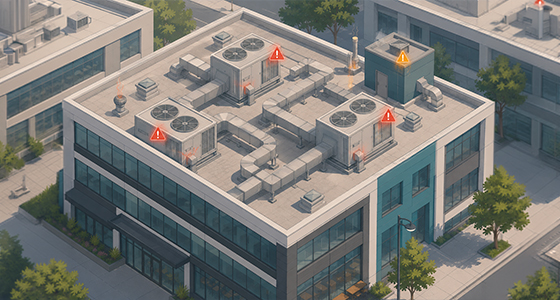
At scale, facility teams lack real-time visibility into mechanical performance. Without continuous telemetry, units run to failure — driving energy waste, tenant complaints, and expensive emergency service calls.
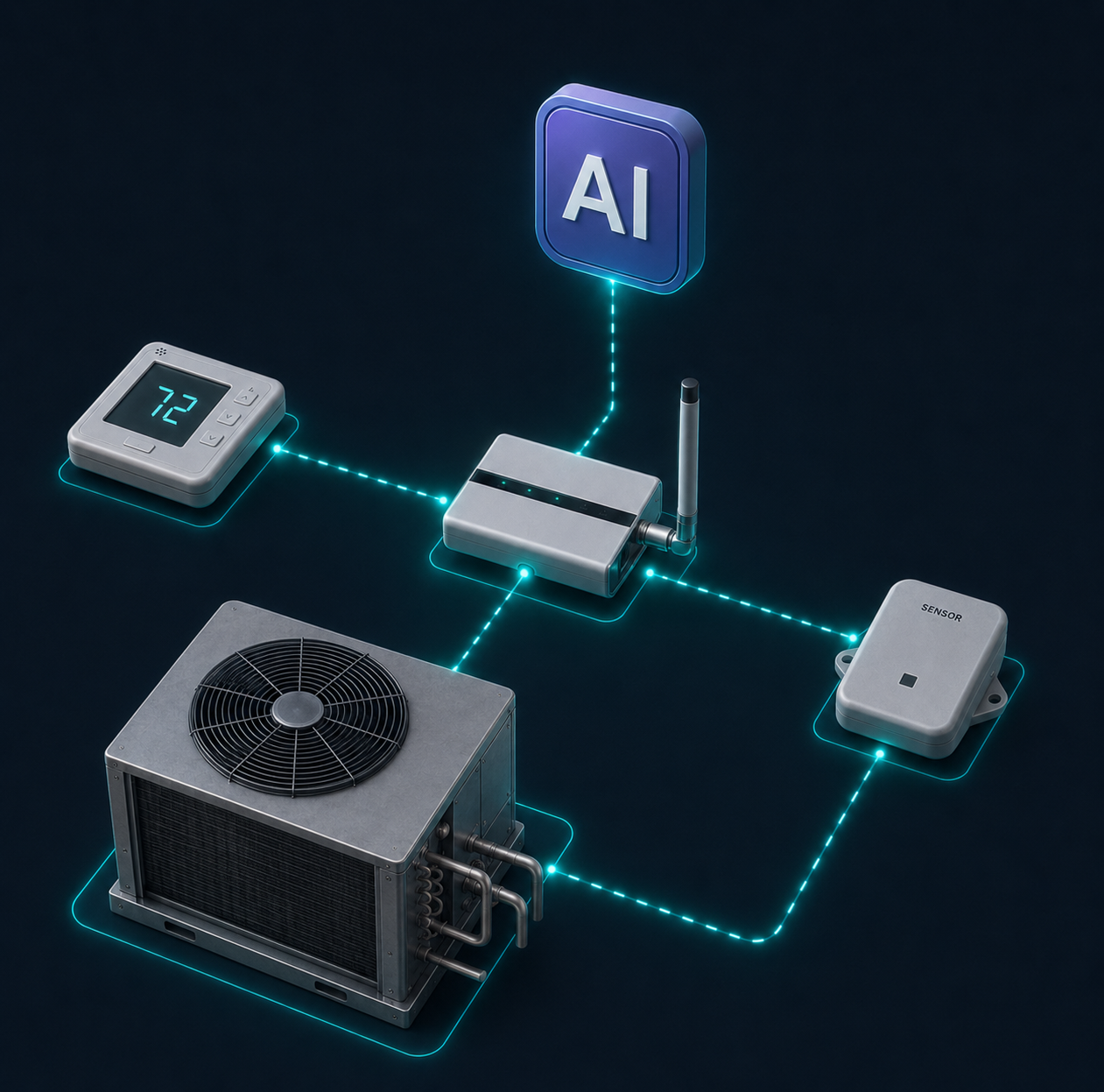
Since 2012, SES has deployed proprietary Demand Limiting Controllers (DLCs) as a centralized energy management system. The DLC aggregates real-time telemetry from sensors, thermostats, and zones into a single unified monitoring dashboard.
This installed base — across 1,100+ locations and five verticals — is what makes everything above it possible. It is the data foundation no competitor can replicate.
From data you already have to faults you can't yet see
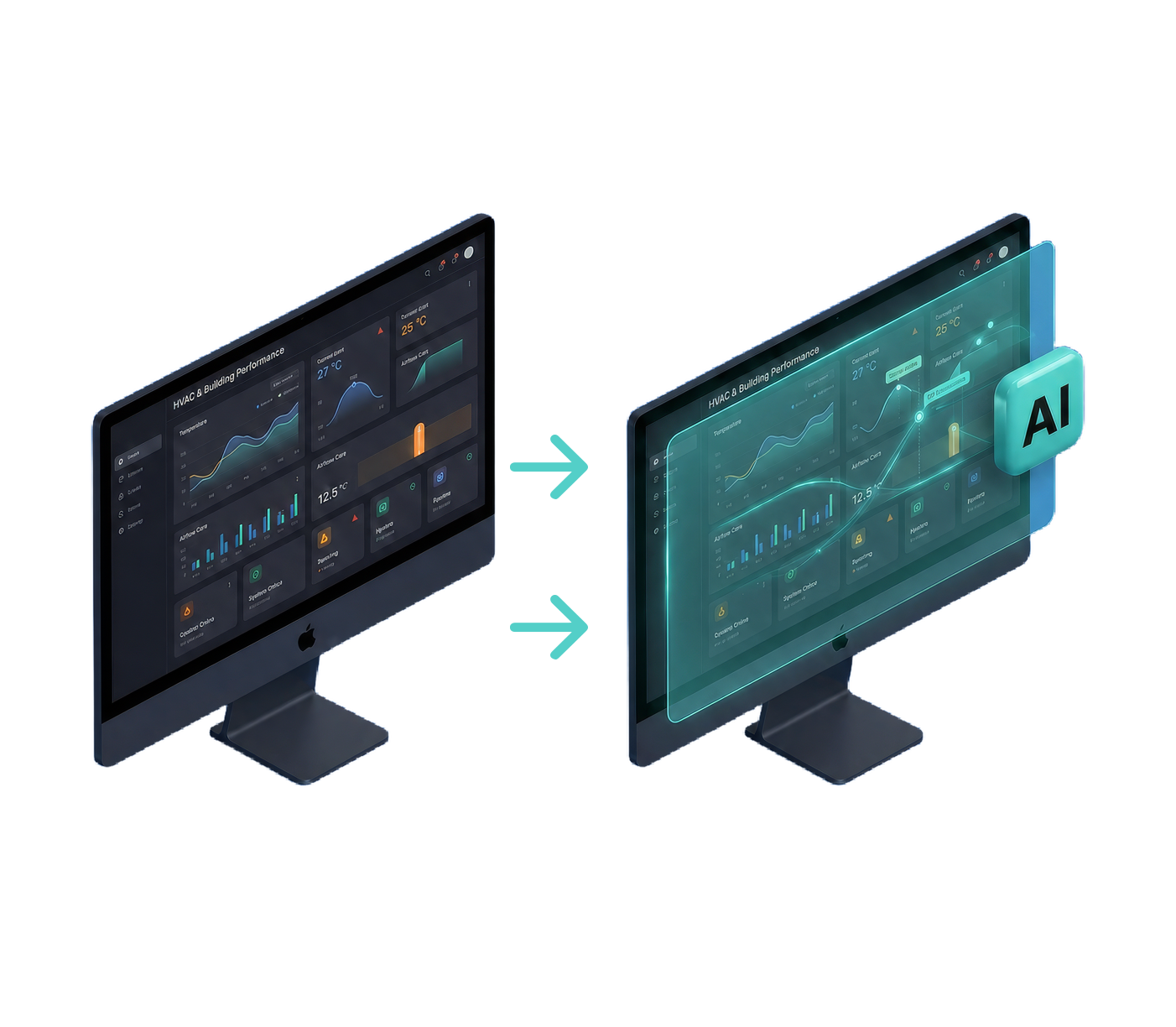
The DLC already aggregates every unit’s telemetry. FDD is the intelligence layer that sits on top of that same foundation. It turns the data you’re already collecting into early fault detection, with no extra system to install on top of it.
The Paradigm Shift
From manual monitoring to augmented AI
The legacy process was human-driven: an account manager watched live feeds, waited for a visible variance to trigger an alert, then manually investigated and built a work order. Reactive by design.
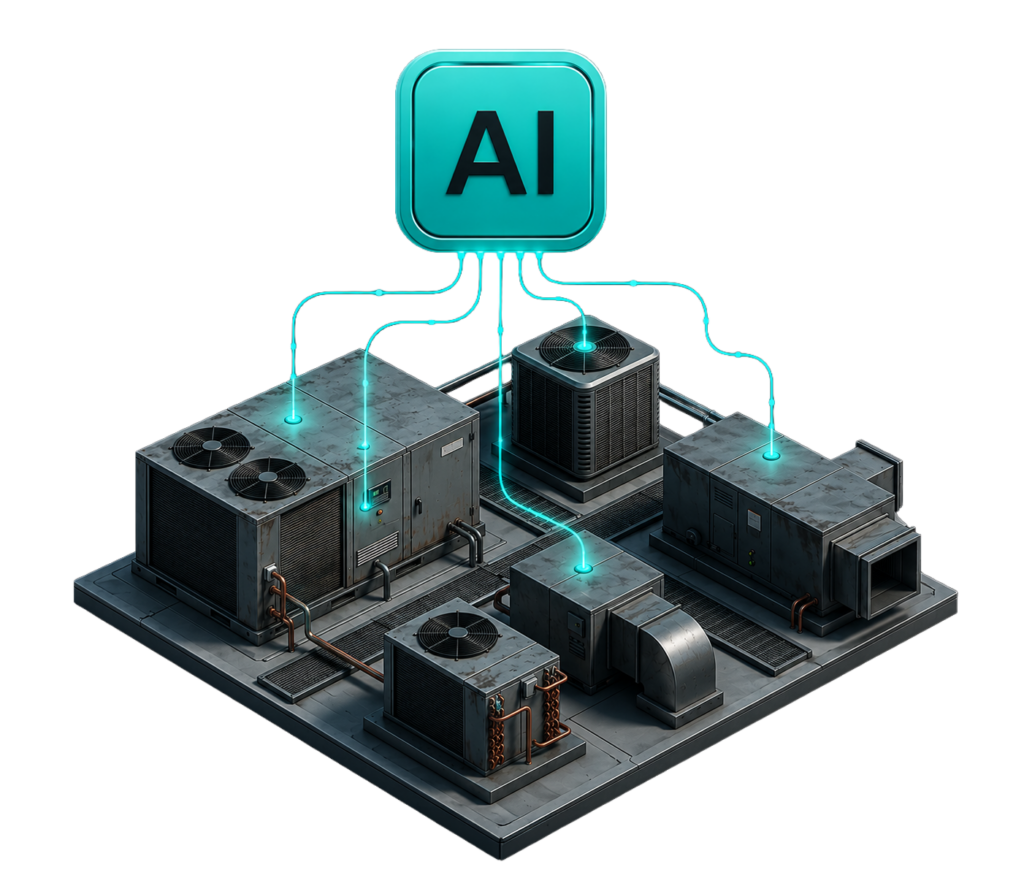
SES replaces that with automated Fault Detection & Diagnostics (FDD). The AI layer synthesizes multiple environmental and historical variables the moment a unit starts — catching degradation instantly, on every run cycle.
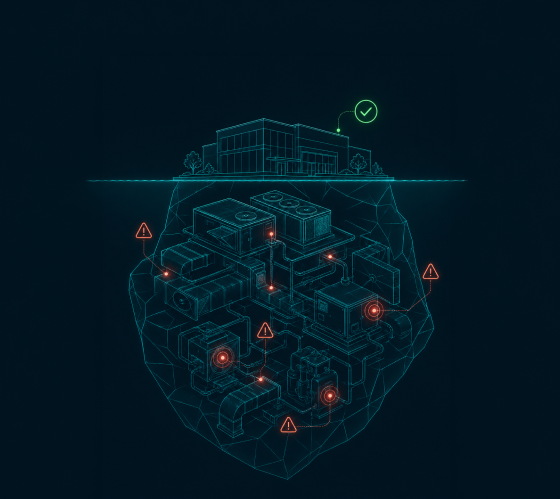
A zone might feel perfectly cool — tricking operators into thinking a unit is healthy. The AI ignores surface comfort and analyzes hidden mechanical output to find failing compressors before they break.
Anatomy of an anomaly
Despite mild outside air and a “satisfied” zone, the AI flagged Unit 3. Over 20 minutes of cooling, the supply temperature barely dropped an insufficient delta of only 1–2°.
The AI identified a failing AC compressor hidden behind a perfectly normal room temperature months before a human, or the building occupants, would ever have noticed.
The Value Driver
Predictive cost avoidance
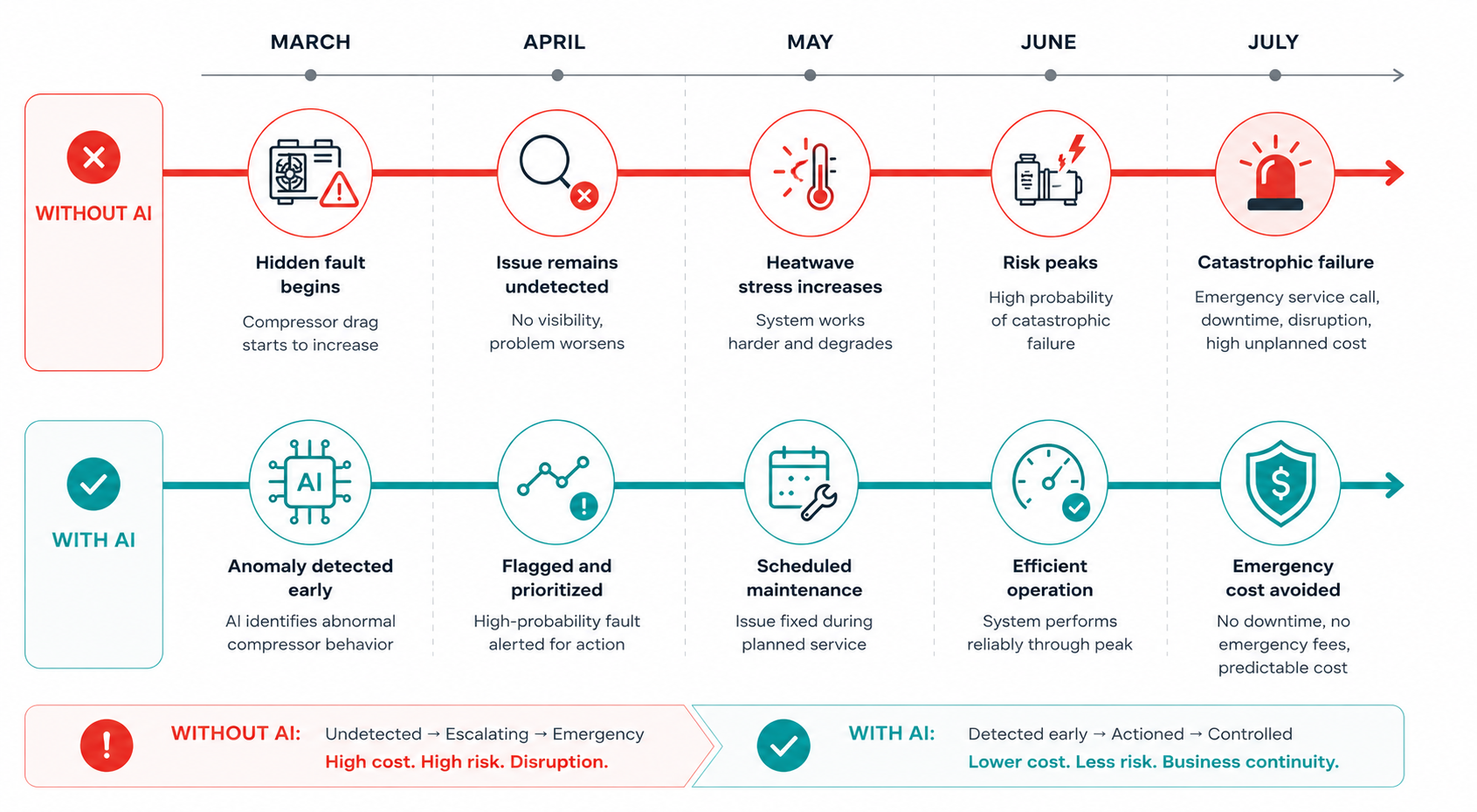
Catching a high-probability fault in March prevents an emergency service failure in July. SES transforms HVAC maintenance from an emergency expense into a controlled, scheduled process.
The Complete Stack
The complete SES value stack
By combining robust hardware engineering with predictive telemetry, SES fundamentally changes the unit economics of commercial real estate portfolios — reducing baseline energy consumption while eliminating catastrophic maintenance costs.
With SES Fault Detection & Diagnostics, failing units are caught months before they break – so repairs are planned, not urgent. Stop reacting. Start predicting.